
Which GC Content Range Is Safe for Most Oligos?
GC content (guanine-cytosine content) is the percentage of G and C bases in a DNA or RNA sequence. It's a fundamental parameter that influences multiple aspects of oligonucleotide behavior:
- Melting temperature: GC pairs form three hydrogen bonds (vs. two for AT), increasing Tm by ~4°C per GC pair
- Secondary structures: High GC content promotes stable hairpins, self-dimers, and other structures
- Synthesis efficiency: Very high GC (>70%) or very low GC (<30%) can cause synthesis problems
- Hybridization specificity: Balanced GC content improves probe binding and reduces non-specific interactions
- Amplification bias: Extreme GC content can cause PCR bias in multiplex reactions
For most applications, 40-60% GC content is optimal, with 50% being ideal. Sequences outside this range may require special handling, redesign, or exclusion from pools.
GC Content Calculation Method
Basic Formula
where G, C, A, T represent counts of guanine, cytosine, adenine, and thymine bases respectively. For RNA, substitute U (uracil) for T.
Melting Temperature Relationship
For short oligos (<14 bp), use the Wallace rule (Wallace et al., 1979):
This shows GC bases contribute ~4°C to Tm vs ~2°C for AT bases.

Modern bioinformatics tools provide visual GC content analysis with color-coded base pair highlighting.
For longer sequences (>14 bp), use nearest-neighbor thermodynamics (SantaLucia 1998, PNAS). See our Tm Calculator for accurate calculations.
Thermodynamic Stability
Nearest-neighbor model (SantaLucia 1998): Duplex stability depends on stacking interactions between adjacent base pairs, not individual bases. GC-rich sequences generally form more stable structures because:
- GC base pairs have three hydrogen bonds vs. two for AT pairs
- GC stacking interactions have more favorable free energy (ΔG°)
- Context matters: GC/CG stacks differ from other dinucleotide combinations
Practical impact: Higher GC content raises Tm and can stabilize secondary structures. Use structure prediction for GC-rich sequences (>60%).
| GC Content Range | Application Suitability | Considerations |
|---|---|---|
| <30% | Not recommended | Low Tm, potential synthesis issues, may require redesign |
| 30-40% | Acceptable with caution | Lower melting temperature, monitor for secondary structures |
| 40-60% | Optimal range | Ideal for most applications, balanced properties |
| 50% | Central target | Balanced composition for pools and libraries |
| 60-70% | Acceptable with caution | Higher Tm, increased secondary structure risk |
| >70% | Not recommended | Very high Tm, stable secondary structures, synthesis challenges |
How GC Content Affects Oligonucleotide Properties
Melting Temperature (Tm)
For short oligos (14-20 nt), each GC base pair contributes roughly 4°C to Tm via the Wallace rule approximation. For longer sequences, the nearest-neighbor model (SantaLucia 1998) provides a more informative sequence-aware estimate by accounting for stacking interactions and sequence context.
Secondary Structure Risk
High GC content promotes stable hairpins, self-dimers, and other secondary structures that can interfere with hybridization and amplification.
Synthesis Efficiency
Both very high and very low GC content can cause synthesis problems. The optimal range (40-60%) ensures consistent synthesis efficiency.
GC Content Impact on Synthesis and Amplification
Based on established molecular biology principles and manufacturer guidelines:
Optimal Range (40-60% GC)
- Highest synthesis success rates with standard phosphoramidite chemistry
- Minimal secondary structure formation during synthesis and handling
- Uniform PCR amplification with standard thermal cycling protocols
- Recommended by NCBI Primer-BLAST and major oligo synthesis vendors (IDT, Sigma-Aldrich)
Moderate Ranges (30-40% or 60-70% GC)
- Generally acceptable but may require optimized synthesis conditions
- 60-70% GC: Increased risk of stable secondary structures (check with structure predictor)
- 30-40% GC: Lower melting temperatures, consider GC clamp at 3' end
- PCR optimization may be needed (touchdown PCR, adjusted MgCl₂ concentration)
Extreme Ranges (<30% or >70% GC)
- Significantly reduced synthesis efficiency with standard protocols
- >70% GC: Very stable secondary structures, may require modified bases or special synthesis conditions
- <30% GC: Low Tm stability, increased non-specific binding risk
- Strong PCR amplification bias in multiplex reactions
- Consider redesign or alternative approaches (LNA, 2'-O-methyl modifications)
References: NCBI Primer Design Guidelines, IDT Technical Bulletins, standard molecular biology protocols (Sambrook & Russell). Actual performance varies based on sequence context, length, and specific synthesis/amplification conditions. Use our Batch Sequence QC for comprehensive pre-synthesis validation.
Enzymatic Synthesis and GC Content Tolerance
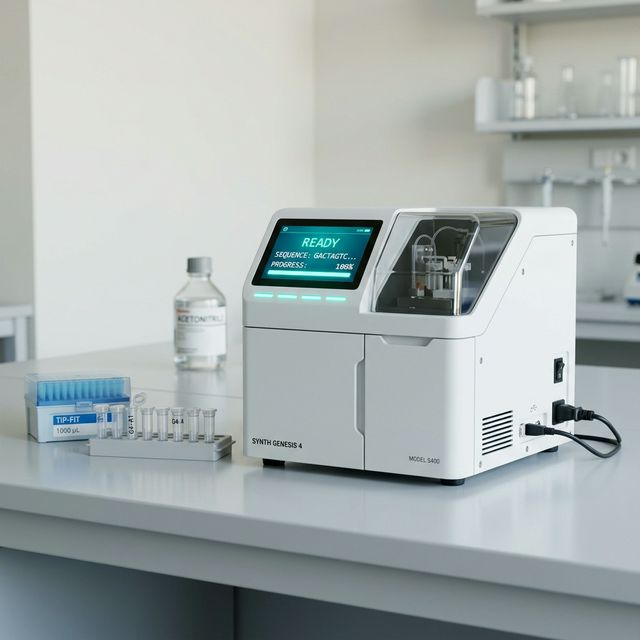
Enzymatic DNA synthesis platforms offer improved GC tolerance compared to traditional phosphoramidite chemistry.
Traditional phosphoramidite chemistry has well-documented limitations with extreme GC content sequences. However, enzymatic DNA synthesis (EDS) platforms emerging in 2025–2026 are changing the landscape:
DNA Script SYNTAX Platform
DNA Script's enzymatic synthesis technology (expanded globally in March 2026 via partnerships with Gencell, BMS, and Biostream) DNA Script's enzymatic synthesis technology uses template-independent terminal deoxynucleotidyl transferase (TdT) enzymes. A December 2025 technical report demonstrated successful synthesis of a 299 bp oligonucleotide with 78.9% GC content and GGGGGGGG repeats (25.8% repeat content) — a composition that would typically fail traditional phosphoramidite chemistry. Custom ssDNA oligos up to 500 nt are supported with enhanced sequence complexity.
Source: DNA Script technical report (Dec 2025); ssDNA oligo service documentation (dnascript.com).
Ansa Biotechnologies — 50 kb Clonal DNA
Ansa's enzymatic platform (launched globally October 2025, IDT distribution partnership January 2026) delivers sequence-perfect constructs up to 50 kilobases—including GC-rich regions that challenge traditional synthesis. Their "On-Time Guarantee" (25 days or less) addresses the historical bottleneck of failed GC-rich orders.
Source: Ansa Biotechnologies BusinessWire (Oct 2025), IDT collaboration announcement (Jan 2026).
EMA Regulatory Guidance (2024–2025)
The European Medicines Agency issued a draft guideline in July 2024 on oligonucleotide development and manufacture (public consultation concluded January 2025). This guideline includes specific quality control requirements for GC content characterization in therapeutic oligonucleotides, acknowledging both chemical and enzymatic synthesis methods.
Source: EMA draft guideline on oligonucleotide development (July 2024).
Practical implication: If your pool contains sequences with extreme GC content (<30% or >70%) that fail traditional phosphoramidite synthesis, consider enzymatic synthesis vendors. Use our GC Content Analyzer to identify candidate sequences, then route them to appropriate synthesis platforms based on GC tolerance thresholds.
G-Quadruplex Risk Assessment in GC-Rich Sequences
G-quadruplexes (G4) are non-canonical DNA structures formed by guanine-rich sequences. They pose a unique challenge in oligo pool design because they can form spontaneously under physiological conditions, interfering with hybridization, amplification, and enzymatic processing.
When to Worry About G-Quadruplexes
- Pattern: ≥4 runs of 2+ consecutive guanines (G2+N1-7)4+
- GC threshold: Risk increases significantly above 70% GC content
- Length: Sequences >20 bp with high G-density are most susceptible
- Detection: Use our Secondary Structure Predictor with ΔG threshold < -3 kcal/mol
CRISPR gRNA: The G-Quadruplex Paradox
Peer-reviewed research reveals a dual effect of G-quadruplexes in CRISPR guide RNA design:
- Benefit: Appending G4 motifs to the 3' end of sgRNAs protects against 3'-5' exoribonuclease degradation, maintaining Cas9 cleavage activity (Nucleic Acids Research, 2023)
- Enhanced editing: G4-modified pegRNAs have demonstrated >80% increase in prime editing efficiency at endogenous targets without increasing off-target effects (Chemical Science, 2024)
- Risk: Excessive G4 formation can sequester the guide RNA, preventing Cas9 loading and reducing editing efficiency
- Recommendation: For CRISPR libraries, flag G4-prone sequences (>4 consecutive G repeats) and validate a subset experimentally before full-scale synthesis
See our CRISPR sgRNA library design for complete G4-aware design guidance.
How Do You Batch-Check GC Content Across Hundreds or Thousands of Sequences?
Prepare Your Sequences
Format your sequences in FASTA format. Each sequence should have:
- A header line starting with">" followed by a sequence identifier
- One or more lines containing the nucleotide sequence
- Multiple sequences separated by header lines
ATCGATCGATCGATCGATCG
GCTAGCTAGCTAGCTAGCTA
ATATATATATATATATATAT
You can prepare sequences in a text editor, Excel (export as .txt), or generate programmatically. Ensure sequences contain only valid nucleotides (A, T, C, G for DNA; A, U, C, G for RNA). If your sequences are in Excel or CSV format, use our Vendor Format Adapter to convert to FASTA.
Open Batch Mode
Navigate to the GC Content Analyzer. Look for the"Batch Mode" toggle or tab at the top of the page and switch to batch processing mode.
Batch mode allows you to process multiple sequences simultaneously, up to 1,000 sequences per batch.
Input Sequences
You have two options for input:
- Paste sequences: Copy and paste FASTA-formatted sequences directly into the input field
- Upload file: Click"Upload File" and select a .txt or .fasta file containing your sequences
The tool automatically detects and parses FASTA format, extracting sequence identifiers and sequences. Invalid sequences or formatting errors will be flagged in the results.
Run Analysis
Click"Analyze" to process all sequences. The tool will:
- Calculate GC content for each sequence
- Determine sequence length and composition
- Generate summary statistics (mean, median, min, max)
- Create distribution histograms
- Flag sequences outside acceptable ranges
Processing time depends on the number of sequences. Most batches of 1,000-5,000 sequences process in under 30 seconds.
Interpret Results
The results panel displays:
Summary Statistics:
- Mean GC: Average GC content across all sequences
- Median GC: Middle value (less affected by outliers)
- Min/Max GC: Range of GC content values
- Standard deviation: Measure of distribution spread
Good Pool Characteristics:
- Mean GC between 45-55%
- Most sequences within 40-60% GC
- Narrow distribution (low standard deviation)
- Few sequences flagged as outliers
Warning Signs:
- Mean GC outside 40-60% range
- Wide distribution (high standard deviation)
- Many sequences with <30% or >70% GC
- Bimodal distribution (two peaks)
Export and Filter Results
Click"Export CSV" to download results for:
- Further analysis in Excel or R
- Integration with other QC tools
- Record-keeping and documentation
- Filtering sequences by GC content thresholds
The CSV file includes sequence identifiers, sequences, GC content, length, and composition for each sequence, making it easy to filter and analyze results.
Which Projects Need Tighter GC Control?
The tighter your downstream assay, the more important it is to control both mean GC and distribution spread across the full set:
Oligo Pool Design
When designing large oligonucleotide pools (e.g., for NGS library preparation or multiplex assays), uniform GC content ensures:
- Consistent melting temperatures across the pool
- Uniform hybridization efficiency
- Reduced synthesis bias
- Better amplification uniformity
Use batch GC analysis to identify sequences outside acceptable ranges and redesign or exclude problematic sequences before synthesis.
CRISPR Library Validation
For CRISPR guide RNA libraries, GC content analysis helps ensure:
- Consistent guide activity across the library
- Minimal secondary structure formation
- Uniform binding affinity
Combine GC analysis with secondary structure prediction and Batch QC for comprehensive validation.
Primer Pool Design
For multiplex PCR primer pools, uniform GC content prevents:
- Amplification bias (some primers amplifying better than others)
- Non-uniform product yields
- Difficulties in optimizing annealing temperature
Analyze all primers together to ensure consistent GC content and identify primers that may need redesign. Combine GC analysis with Tm Calculator to ensure uniform melting temperatures across your primer pool.
When Should GC Review Trigger Tm, Structure, or Batch QC Follow-Up?
GC review is most useful when it becomes the first pass in a broader validation sequence. Use this order when you need to decide whether outliers should be redesigned, screened more deeply, or passed to final QC:
Initial GC Content Analysis
Start with batch GC analysis to identify sequences outside optimal range (40-60%). Flag outliers for review or redesign.
Target: Pool mean 45-55%, SD <5%
Melting Temperature Validation
Use Tm Calculator to verify uniform melting temperatures. GC-balanced sequences (40-60%) typically show Tm range within 5-8°C.
Target: Tm within ±5°C of pool mean
Secondary Structure Screening
Apply Secondary Structure Predictor to detect hairpins and self-dimers. High GC sequences (>60%) are particularly prone to stable structures.
Target: ΔG > -3 kcal/mol for hairpins, ΔG > -6 kcal/mol for dimers
Comprehensive Batch QC
Run Batch Sequence QC for multi-parameter validation including homopolymer runs, sequence complexity, and poolability metrics.
Target: >95% sequences passing all QC filters
Format Preparation & Export
Convert validated sequences to synthesis vendor format using Vendor Format Adapter. Export QC reports for documentation.
Output: Vendor-ready files + QC summary CSV
Recommended QC Order
For large-scale projects (>1,000 sequences), perform Step 1 (GC analysis) first to identify and remove outliers before computationally intensive structure prediction. This tiered filtering approach follows established QC protocols and reduces analysis time for downstream steps. See our full pre-order oligo pool QC guide for complete QC guidance.
Which GC Review Habits Prevent Rework Later?
These review habits help you catch GC-driven problems before they spread into Tm disagreements, structure failures, or vendor-ready files:
Establish Clear QC Thresholds
Before batch processing, define your acceptance criteria. For most applications:
- Accept sequences with 40-60% GC content
- Flag sequences with 30-40% or 60-70% GC for review
- Reject or redesign sequences with <30% or >70% GC
- Aim for pool average GC content between 45-55%
These thresholds ensure consistent behavior across your pool while allowing some flexibility for sequences that cannot be redesigned.
Analyze Distribution Patterns
Don't just look at mean GC content—examine the distribution:
- Normal distribution: Most sequences clustered around the mean—ideal for pools
- Bimodal distribution: Two peaks—may indicate inconsistent design criteria
- Wide distribution: High standard deviation—suggests need for tighter design constraints
- Skewed distribution: Asymmetric spread—may require rebalancing the pool
Use the histogram visualization in batch results to identify these patterns and adjust your design strategy accordingly.
Combine with Other QC Metrics
GC content analysis is most powerful when combined with other quality control metrics:
- Use Tm Calculator to ensure uniform melting temperatures
- Apply Secondary Structure Predictor to identify problematic structures
- Run Batch Sequence QC for comprehensive validation
- Check Error Rate Calculator for synthesis efficiency predictions
A multi-metric approach provides a complete picture of sequence quality and helps identify sequences that pass one test but fail others.
Handle Edge Cases Strategically
Some sequences may have extreme GC content due to biological constraints (e.g., targeting specific genomic regions). In these cases:
- Document why extreme GC content is necessary
- Consider alternative design strategies (longer sequences, modified bases)
- Test these sequences separately before including in pools
- Limit the proportion of extreme GC sequences in pools (<5% recommended)
Strategic handling of edge cases maintains pool quality while accommodating biological requirements.
GC Review Checks That Prevent Rework
Check 1: Review the distribution, not only the mean
Problem: Focusing only on mean GC content while ignoring distribution patterns.
Solution: Always examine the histogram and standard deviation. A pool with mean 50% GC but wide distribution (SD >10%) will perform worse than a pool with mean 48% GC but narrow distribution (SD <5%).
Check 2: Keep input formatting consistent
Problem: Mixing formats or using incorrect FASTA syntax leads to parsing errors and incomplete analysis.
Solution: Always use standard FASTA format with headers starting with">". Validate your input before batch processing. Use our Format Converter if needed.
Check 3: Export results before filtering sequences
Problem: Analyzing sequences but not saving results for future reference or integration with other tools.
Solution: Always export results as CSV. This allows you to filter sequences, track changes over time, and integrate with downstream analysis.
Check 4: Review sequence length alongside GC%
Problem: Focusing solely on GC percentage without considering sequence length, which also affects properties.
Solution: Review both GC content and length in batch results. Very short sequences (<15 bp) or very long sequences (>100 bp) may require different GC content considerations.
How Do You Troubleshoot GC-Driven Failures?
Use this decision matrix to diagnose and resolve common GC content-related problems in oligo pool design:
| Issue | Root Cause | Solution | Tool/Validation |
|---|---|---|---|
| Pool shows bimodal GC distribution | Inconsistent design constraints or mixed applications | Separate pools by application; apply uniform design rules | GC Analyzer histogram |
| High GC sequences (>70%) fail synthesis | Strong secondary structures block polymerase | Redesign with wobble bases; consider modified bases (LNA) | Structure Predictor |
| PCR amplification bias across pool | Wide GC distribution (SD >10%) causes differential Tm | Filter sequences outside 40-60% GC; use two-step PCR protocol | Tm Calculator + batch analysis |
| Low GC sequences (<30%) show primer-dimers | AT-rich regions enable non-specific binding | Extend sequence length; recommend 1-3 G/C bases in the last 5 bases of 3' end ("GC clamp") per NCBI Primer-BLAST guidelines | Dimer Checker |
| CRISPR guides show variable activity | GC content affects Cas binding efficiency | Target 40-60% GC in seed region (PAM-proximal 8-12 bp) | CRISPR guide |
| NGS library uneven coverage | GC bias in PCR enrichment and sequencing | Normalize to 45-55% GC; use GC-balanced adapters | Batch QC validation |
Critical Decision Point
When extreme GC content is unavoidable (e.g., targeting specific genomic regions):
- Limit problematic sequences to <5% of total pool
- Synthesize at reduced scale first for validation
- Consider alternative chemistries (2'-O-methyl RNA, peptide nucleic acids)
- Use touchdown PCR protocols with extended elongation times
- Document exceptional sequences in QC reports with rationale
How Should You Adjust GC Targets for NGS, Multiplex PCR, or CRISPR Libraries?
NGS Library Preparation
For next-generation sequencing library preparation, GC content uniformity is critical for:
- Preventing amplification bias during PCR enrichment
- Ensuring uniform sequencing depth across targets
- Reducing adapter ligation efficiency variations
Target 45-55% GC content with standard deviation <5%. Use batch GC analysis to identify and redesign outliers before library construction. See our How to Design Illumina Adapters and Dual Indexes for GC-optimized adapter sequences.
Multiplex PCR Assays
In multiplex PCR, uniform GC content ensures:
- Consistent annealing temperatures across primer pairs
- Uniform amplification efficiency
- Reduced competition between amplicons
Analyze all primers together using batch mode. Aim for GC content within 5% of the pool mean. Combine with Tm Calculator to ensure all primers have similar melting temperatures.
CRISPR Guide RNA Libraries
For CRISPR screening libraries, GC content optimization is essential for:
- Consistent guide RNA activity
- Minimizing secondary structure formation
- Ensuring uniform Cas protein binding
Target 40-60% GC content for most guides. Use batch GC analysis combined with secondary structure prediction to identify problematic guides. See our CRISPR sgRNA library design for complete guidance.