How to Troubleshoot Oligo Pool Dropout, Uniformity, and Cloning Failures
Use this page when a pool comes back skewed, missing sequences, or hard to clone. Return to the main oligo pool guide when the problem points back to design rules, synthesis-method choice, QC expectations, or vendor review. It covers the most common failure patterns, likely causes, and next diagnostic stepsso you can troubleshoot before you reorder or redesign the whole pool.
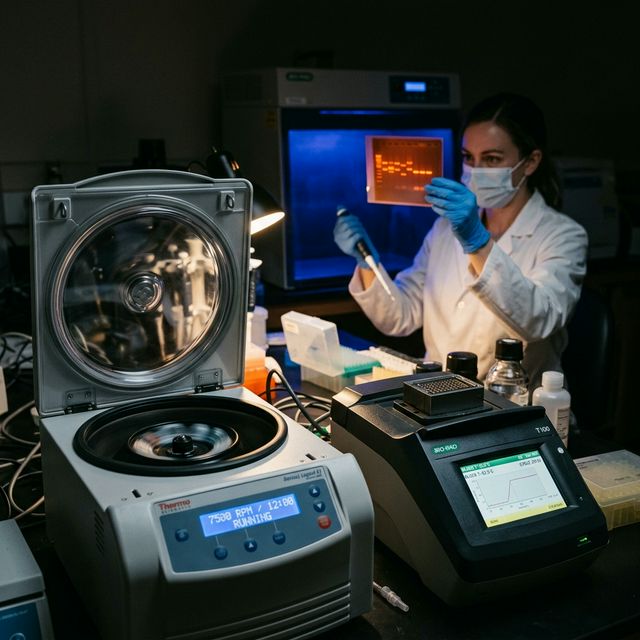
Diagnosing pool amplification dropouts and uniformity failures.
Common Failure Patterns and Fixes
High Dropout Rate (>10%)
Symptoms
Many designed oligos missing from NGS verification. Large fraction of sequences with <10 reads.
Root Causes
- •Sequences contain synthesis-problematic features (homopolymers, extreme GC, strong hairpins)
- •Pool too large for synthesis platform capacity
- •Insufficient NGS sequencing depth
Solutions
- ✓Screen sequences with Batch QC before ordering — remove GC <25% or >75%, homopolymers >4 nt
- ✓Check if pool size exceeds vendor capacity limits
- ✓Increase NGS depth to ≥500x per designed oligo
Poor Uniformity (Gini >0.35)
Symptoms
Large variation in read counts between oligos. Some oligos dominate, others are under-represented.
Root Causes
- •Oligo length variation >20 bp across pool
- •GC content bias in synthesis
- •PCR amplification bias (GC-rich or GC-poor oligos amplify unevenly)
Solutions
- ✓Normalize oligo lengths (±5 bp) or add padding sequences
- ✓Reduce PCR cycles to minimum (6-8 cycles)
- ✓Use high-fidelity polymerase with low GC bias (KAPA HiFi, Q5)
Low Sequence Accuracy (<80%)
Symptoms
High mismatch, insertion, or deletion rate in NGS reads vs designed sequences.
Root Causes
- •Array synthesis error rate (~1/200 bp) for long oligos
- •Oligos too long (>200 bp increases errors exponentially)
- •n-1 deletion products from incomplete coupling
Solutions
- ✓Keep oligos shorter when the application allows
- ✓Use error correction enzymes (ErrASE, CorrectASE) post-synthesis
- ✓Reopen vendor review when the selected product tier does not match the accuracy requirement
Amplification Bias After PCR
Symptoms
Uniform pool becomes skewed after PCR. Shorter or GC-moderate oligos over-represented.
Root Causes
- •Too many PCR cycles (>10)
- •Non-high-fidelity polymerase used
- •Unequal primer binding due to Tm variation
Solutions
- ✓Reduce to 6-8 PCR cycles monitored by qPCR
- ✓Use Q5 or KAPA HiFi polymerase
- ✓Equalize primer Tm within ±2°C across all oligo pairs
Cloning Failure (Low Colony Count)
Symptoms
Few or no colonies after transformation. Wrong insert size in colony PCR.
Root Causes
- •Incomplete restriction digest of vector
- •Poor ligation efficiency
- •Oligo pool not properly amplified or purified
Solutions
- ✓Use fresh restriction enzymes (BsmBI/BsaI), verify complete digestion by gel
- ✓Optimize DNA:vector molar ratio (3:1 to 5:1)
- ✓Gel-extract or bead-purify amplified pool before cloning
Cross-Contamination Between Sub-Pools
Symptoms
Oligos from one sub-pool detected in another. Unexpected sequences in verification.
Root Causes
- •Insufficient washing between sub-pool releases
- •PCR primer cross-reactivity between pools
- •Sample mix-up during handling
Solutions
- ✓Use unique primer pairs per sub-pool with ≥5 bp sequence difference
- ✓Verify sub-pool identity by qPCR before amplification
- ✓Contact vendor for sub-pool re-synthesis if contamination is systematic
Checklist Before You Re-Order
- □Run Batch QC on all sequences before ordering
- □Keep oligo lengths within ±10% of target
- □Maintain GC content between 30-70%
- □Remove homoploymers ≥5 nt (especially poly-G)
- □Check for secondary structures (ΔG > -3 kcal/mol)
- □Include positive and negative controls
- □Use high-fidelity polymerase for amplification
- □Limit PCR to 6-8 cycles, monitor by qPCR
- □Verify by NGS at ≥500x depth per oligo
Related Troubleshooting Pages
Read Oligo Pool QC Metrics
Understanding uniformity, error, Gini.
Check Oligo Pool Design Rules Before Ordering
Review sequence constraints that prevent failures before you submit.
Design an Oligo Pool Before Ordering
Return to the pool guide before redesigning the sequence set.
Compare Oligo Pool Vendors
Reopen vendor fit when QC scope, delivery format, or product tier caused the failure.
Run Batch QC Before Ordering
Screen sequence constraints before the next quote or order submission.
Error Rate Calculator
Predict synthesis accuracy.