Diagnose PCR Failure from Hairpins and Primer Dimers
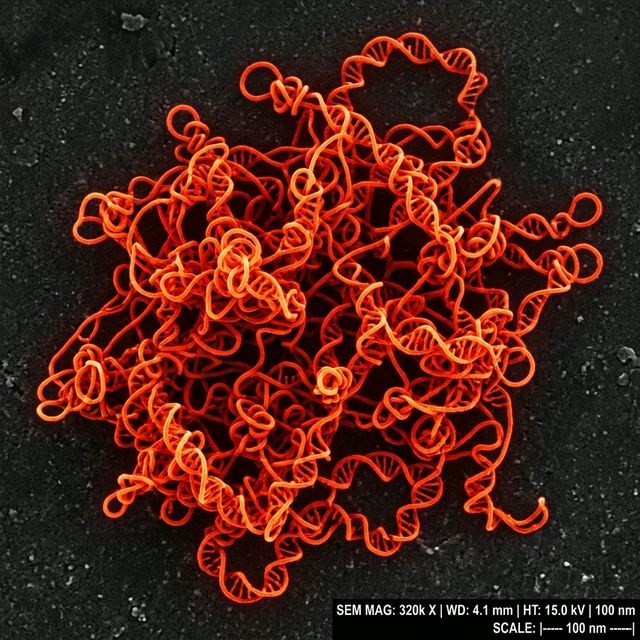
Hairpins and primer-dimer structures can steal primers and block extension before the reaction reaches the target.
Use this page when PCR failed and you need to decide whether hairpins, self-dimers, or cross-dimers are actually the problem before you redesign primers or keep changing conditions. It walks through gel symptoms, ΔG thresholds at the annealing temperature, tool comparisons, and rescue steps. If you already know the next action, open the free Secondary Structure Predictor, How to Detect Secondary Structures, Primer Analyzer, and Design & Validate PCR Primers.
Key Takeaways
- •Three types of secondary structures can cause PCR failure: hairpins (intramolecular), self-dimers (homodimers), and cross-dimers (heterodimers between forward and reverse primers).
- •Critical ΔG thresholds at the reaction temperature: hairpins ΔG > −2.0 kcal/mol (acceptable), self-dimers ΔG > −5.0 kcal/mol, cross-dimers ΔG > −5.0 kcal/mol. Structures ΔG < −4.0 kcal/mol at 60°C will severely inhibit most PCR reactions.
- •ΔG values are temperature-dependent: a structure with ΔG = −3.0 kcal/mol at 37°C may be only −0.5 kcal/mol at 60°C. Always evaluate ΔG at your annealing temperature.
- •DMSO (2–10%) lowers annealing temperature by approximately 0.5–0.6°C per 1% (v/v) and destabilizes secondary structures in GC-rich templates (Varadaraj & Skinner, 1994).
- •Always screen both primers individually (hairpins + self-dimers) AND as a pair (cross-dimers) before ordering.
- •If redesign is not possible, try additive solutions in this order: (1) optimize annealing temperature with gradient PCR, (2) add 5% DMSO, (3) add 1 M betaine, (4) use a hot-start polymerase.
What are you trying to diagnose?
Related structure checks
Recheck structure risk in the core predictor before changing cycling conditions. Run both primers at the annealing temperature, then use this diagnosis page when the result points to a real PCR failure pattern or you need to choose between redesign and reaction-condition rescue.
Page contents
How Do Secondary Structures Shut Down PCR?
PCR fails when primers or templates choose a self-structure or primer-primer interaction over the intended primer-template duplex. The main failure modes to check are intramolecular hairpins, self-dimers between copies of the same primer, and cross-dimers between forward and reverse primers. Any of these can reduce yield, shut amplification down, or create non-specific products.
The stability of each structure is quantified by its Gibbs free energy (ΔG). More negative ΔG values indicate more stable (more problematic) structures. Critically, ΔG is temperature-dependent — a structure that is very stable at room temperature (25°C) may be completely denatured at a PCR annealing temperature of 60°C. Always evaluate ΔG at your intended annealing temperature.
| Structure Type | Formation | ΔG Threshold (at Ta) | Severe | PCR Impact |
|---|---|---|---|---|
| Hairpin | Intramolecular (self-folding) | ΔG > −2.0 kcal/mol | ΔG < −4.0 kcal/mol | Blocks template binding |
| Self-Dimer | Intermolecular (same primer) | ΔG > −5.0 kcal/mol | ΔG < −8.0 kcal/mol | Depletes primer, generates artifacts |
| Cross-Dimer | Intermolecular (different primers) | ΔG > −5.0 kcal/mol | ΔG < −8.0 kcal/mol | Primer–dimer band on gel |
Important: All ΔG thresholds above are evaluated at the annealing temperature (typically 55–65°C for PCR). A structure showing ΔG = −6.0 kcal/mol at 25°C may be only −1.0 kcal/mol at 60°C and pose no problem. Always specify the temperature when reporting ΔG values.
Is Secondary Structure Actually Causing the Failure?
Not every failed reaction is a structure problem. Use the gel pattern and primer checks below to decide whether you should keep troubleshooting PCR conditions or move straight into structure analysis and redesign.
What do you see on the gel?
No product at all
→ Could be strong hairpin at primer binding site (check ΔG ≤ -4 kcal/mol at Ta) OR template secondary structure blocking extension. Also check: Is your template intact? Are primers correct sequence?
Low-molecular-weight band (30-80 bp) + weak or no target
→ Classic primer dimer. Check hetero-dimer ΔG between your forward and reverse primers. If ΔG ≤ -5 kcal/mol, redesign or reduce primer concentration to 200 nM.
Multiple non-specific bands
→ Less likely secondary structure; more likely non-specific priming. Increase annealing temperature. If GC-rich template, try adding 5% DMSO.
Correct band but weak yield
→ Moderate structure competition. Check hairpin ΔG — if between -2 and -4 kcal/mol, try adding DMSO or optimizing Ta with gradient PCR. Redesign not necessarily needed.
Basic reaction check: Before assuming secondary structure, rule out the basics: (1) Template quality — NanoDrop A260/A280 should be 1.8-2.0; (2) Primer concentration — use 200-500 nM; (3) Polymerase — is it expired? (4) Cycling conditions — is denaturation reaching 95-98°C?
Which Hairpins Should Force a Primer Redesign?
Hairpins form when a single-stranded primer folds back on itself, creating an intramolecular stem-loop structure. The stem is stabilized by Watson-Crick base pairing between complementary regions within the primer, while the loop is the unpaired region connecting the two stem halves.
What makes a hairpin stable enough to matter?
- Stem: Minimum 3 consecutive base pairs (the most stable hairpins have ≥4 bp stems with ≥2 GC pairs)
- Loop: Minimum 3 nucleotides (loops of 4–5 nt are the most stable thermodynamically)
- Stability: GC-rich stems are significantly more stable than AT-rich stems
Why do hairpins block PCR?
When a primer forms a hairpin at the annealing temperature, the stem region is unavailable for hybridization with the template. If the hairpin involves the 3' end of the primer, it can also serve as a false priming site, leading to polymerase extension of the hairpin structure rather than the intended template. This produces non-specific products or primer-dimer artifacts.
Thermodynamics Reference
Hairpin stability is calculated using the nearest-neighbor model with loop entropy corrections from SantaLucia, J. Jr. & Hicks, D. (2004). "The Thermodynamics of DNA Structural Motifs." Annual Review of Biophysics and Biomolecular Structure, 33: 415–440. Loop sizes of 3–30 nt are supported, with loops of 4 nt having the most favorable (most negative) loop entropy contribution.
Which Self-Dimers Matter Before You Reorder?
Self-dimers (homodimers) form when two copies of the same primer hybridize to each other through complementary regions. Because primers are present at high concentration in PCR (typically 200–500 nM), intermolecular interactions are statistically likely.
Why does 3' end overlap matter most?
Self-dimers are most dangerous when the 3' end of the primer is involved in the dimer structure. Polymerase can extend from a 3' end that is base-paired, even in a dimer context, producing short artifacts that accumulate exponentially during PCR. Even a 2–3 bp overlap at the 3' ends is sufficient to initiate extension.
Example: Self-dimer with 3' end involvement
5'-ATCGATCGATCG-3'
3'-GCTAGCTAGCTA-5'
↑ Both 3' ends are base-paired → polymerase can extend both strands
Design rule: Avoid ≥3 consecutive complementary bases at the 3' end when the primer is aligned with itself in antiparallel orientation. Even if the overall self-dimer ΔG is acceptable (>−5 kcal/mol), 3' end self-dimers can generate artifacts.
Which Cross-Dimers Create Primer-Dimer Bands?
Cross-dimers (heterodimers) form between two different primers in the reaction — typically the forward and reverse primers. In multiplex PCR, the number of potential cross-dimer interactions grows combinatorially: for n primers, there are n(n−1)/2 possible pairs.
How do you recognize a cross-dimer problem?
The hallmark of cross-dimer formation is a strong band at the bottom of your agarose gel (typically 30–80 bp), often brighter than the target band. In qPCR with SYBR Green, cross-dimers produce a secondary melt curve peak at a lower temperature than the target amplicon.
- ΔG threshold: ΔG > −5.0 kcal/mol at Ta is acceptable
- Severe: ΔG < −8.0 kcal/mol produces visible primer-dimer bands
- 3' end overlap: Even 2 complementary bases at both 3' ends can prime extension
Multiplex tip: For multiplex PCR with 4+ primer pairs, use systematic screening. Enter all primer sequences into our Secondary Structure Predictor to check all pairwise interactions simultaneously.
Rescuing a Failed GC-Rich PCR
Here's a real scenario: amplifying a GC-rich region of human MYC oncogene (NM_002467.6, exon 2, ~70% GC). The original primer pair failed completely. Let's walk through diagnosis and rescue.
The failed primer
Result: No product on gel. Not even with 5% DMSO.
The rescued primer
Shifted binding site 8 nt downstream to avoid the self-complementary GC-rich stretch. Also shortened to reduce overall GC burden:
Result: Clean single band with 5% DMSO, Ta = 60°C.
Redesign note: When dealing with GC-rich targets, shifting the primer by even a few nucleotides can dramatically change the hairpin ΔG. Always use our Structure Predictor to test multiple candidate positions. A difference of 5 kcal/mol in ΔG can make or break your PCR.
Which Tool Should You Use to Check Hairpins and Dimers?
Several tools can predict oligonucleotide secondary structures. They differ in algorithm, features, and ease of use. We recommend checking with at least two tools for critical experiments.
| Tool | Hairpin | Self-Dimer | Cross-Dimer | Custom T | Batch | Free |
|---|---|---|---|---|---|---|
| OligoPool | Yes | Yes | Yes | Yes | Yes | Yes |
| IDT OligoAnalyzer | Yes | Yes | Yes | Yes | No | Account required |
| UNAFold (mFold) | Yes | Yes | Yes | Yes | No | Yes |
| Primer3 | Yes | Yes | Limited | No | Yes | Yes |
| NUPACK | Yes | Yes | Yes | Yes | Yes | Academic |
All tools use some variant of nearest-neighbor thermodynamics. ΔG values may differ slightly between tools due to different parameter sets or loop entropy models. Differences of ±0.5 kcal/mol between tools are normal and generally not significant for primer design decisions.
What Should You Try Before Redesigning Primers?
Strategy 1: Redesign the Primer
First choiceThe most effective solution. Shift the primer binding site by 2–5 nt upstream or downstream to disrupt the complementary region causing the structure. Maintain all other primer design rules (length 18–25 nt, Tm 55–65°C, GC 40–60%).
Strategy 2: Optimize Annealing Temperature
Always tryRun a gradient PCR from (Tm − 10°C) to Tm in 2°C increments. Higher annealing temperatures destabilize secondary structures while maintaining specific primer–template hybridization. This often resolves moderate hairpins (ΔG −2 to −4 kcal/mol at 60°C).
Strategy 3: Add DMSO (2–10%)
GC-rich templatesDMSO disrupts base-pair hydrogen bonds and destabilizes secondary structures, especially in GC-rich sequences. Reduces effective annealing temperature by approximately 0.5–0.6°C per 1% (v/v) in PCR context (Varadaraj & Skinner, 1994). Start with 5% and adjust. Note: DMSO can inhibit some polymerases at >10%.
Strategy 4: Add Betaine (0.5–2 M)
Extreme GC biasBetaine (N,N,N-trimethylglycine) equalizes the contribution of GC and AT base pairs to DNA stability. Particularly effective for templates with extreme GC-content variation. Often used in combination with DMSO for refractory templates.
Strategy 5: Use Hot-Start Polymerase
Prevent artifactsHot-start polymerases are inactive at room temperature and activate only at high temperatures (95°C). This prevents primer extension during the low-temperature reaction setup phase, when secondary structures and primer-dimers are most stable.
Strategy 6: Reduce Primer Concentration
Dimers onlyLowering primer concentration from 500 nM to 200 nM reduces intermolecular interactions (self-dimers and cross-dimers) by reducing the probability of primer–primer encounters. This has minimal effect on hairpins (intramolecular).
Template integrity check: Before redesigning primers, verify your template is intact. Run 1 μL on a 1% agarose gel — degraded template (smear instead of a sharp band) mimics secondary structure failure. DNA stored in water (not TE) at 4°C degrades within weeks due to trace nucleases and acid depurination. Re-extract if the template looks degraded.
Gradient PCR check: A gradient PCR (testing 8 annealing temperatures in one run) is the fastest way to determine if your failure is temperature-related vs structure-related. If no temperature gives a product, the problem isn't annealing — it's structural blockage on the template. If one temperature works, you just need to adjust your Ta and move on.
Redesign check: When you redesign a primer to avoid a hairpin, always re-check for cross-dimer formation with all other primers in your reaction. One frequent failure mode is fixing a hairpin while introducing a strong 3'-end complementarity with the partner primer, creating a primer-dimer that outcompetes your target. Use our Secondary Structure Predictor with all primers loaded simultaneously.
Protocol: How to Rescue PCR with DMSO & Betaine
When secondary structures cause PCR failure, the fastest rescue strategy is adding destabilizing agents like DMSO or betaine. Here's a systematic protocol to try both individually and in combination.
Protocol: DMSO/Betaine PCR Rescue (3-Condition Screen, 50 μL each)▾
Set up 3 reactions in parallel:
| Condition | Additive | Final Conc. | Tm Adjustment | Best For |
|---|---|---|---|---|
| A | DMSO | 5% (v/v) | Reduce by ~3°C | Hairpins, GC-rich templates |
| B | Betaine | 1 M | No change needed | Self-dimers, long repeats |
| C | DMSO + Betaine | 3% + 0.8 M | Reduce by ~2°C | Severe structures (ΔG < −6) |
Base Mix (per reaction, 50 μL):
- 10 μL 5× Q5 buffer + 1 μL dNTPs (10 mM each) + 2.5 μL each primer (10 μM)
- 0.5 μL Q5 polymerase + 1 μL template (1–10 ng)
- Add DMSO/betaine per condition above, top to 50 μL with H₂O
Cycling (Touchdown):
- 98°C — 30 s (initial denaturation)
- 10 cycles: 98°C 10 s → (adjusted Tm + 5)°C → (adjusted Tm − 5)°C (−1°C/cycle) → 72°C 30 s/kb
- 25 cycles: 98°C 10 s → (adjusted Tm − 5)°C 30 s → 72°C 30 s/kb
- 72°C — 2 min → 4°C hold
Source: Henke et al. (1997) “Betaine improves PCR amplification of GC-rich DNA”; NEB Q5 DMSO addendum (2026). Always include a no-additive control reaction.
DMSO concentration check: DMSO concentrations above 10% inhibit most polymerases — including Q5 and Phusion. If 5% DMSO doesn't work, switch to betaine (which has no upper toxicity limit for PCR) rather than increasing DMSO. For Taq-based reactions, DMSO tolerance is even lower (~3% max).
Frequently Asked Questions
What ΔG value indicates a problematic hairpin?▾
How is DMSO different from betaine for PCR optimization?▾
Can I have both self-dimers and cross-dimers simultaneously?▾
Why does my primer show no hairpins at 60°C but strong ones at 25°C?▾
Should I avoid all primers that form any self-dimer?▾
What tools can predict secondary structures for free?▾
Related Tools
Secondary Structure Predictor
Detect hairpins, self-dimers, and cross-dimers with ΔG calculations at custom temperatures.
Tm Calculator
Calculate melting temperature with SantaLucia nearest-neighbor parameters and Owczarzy salt corrections.
Primer Analyzer
All-in-one primer quality report: Tm, GC, length, secondary structures.
GC Content Analyzer
Check GC percentage and distribution to identify structure-prone regions.
Oligo Properties Calculator
Calculate Tm, molecular weight, extinction coefficient, and more.
Dilution Calculator
Prepare primer dilutions for optimized PCR reactions.
Related PCR Troubleshooting Pages
Continue with the page or tool that matches whether the failure is structural, thermal, or part of a broader primer redesign loop.
Return to PCR Primer Design
Go back to the broader primer design guide once the structure failure is understood.
Why Do Tm Calculators Disagree?
Use this when failed PCR also points to mismatched thermal assumptions between tools or buffers.
Resolve Tm Discrepancies Between Tools
Open this if the next blocker is aligning annealing logic across different calculators.
Open the Structure Walkthrough
Use the walkthrough when you want a direct sequence for hairpin and dimer checks.
Open the Structure Predictor
Jump straight into the calculator if you are ready to test the failing primer pair now.